Service and Interaction Design Lead, UK Government – Department for International Trade
Find Your Product: Helping businesses navigate complex trade rules
Helping UK businesses identify their products quickly and confidently
Context and Challenge
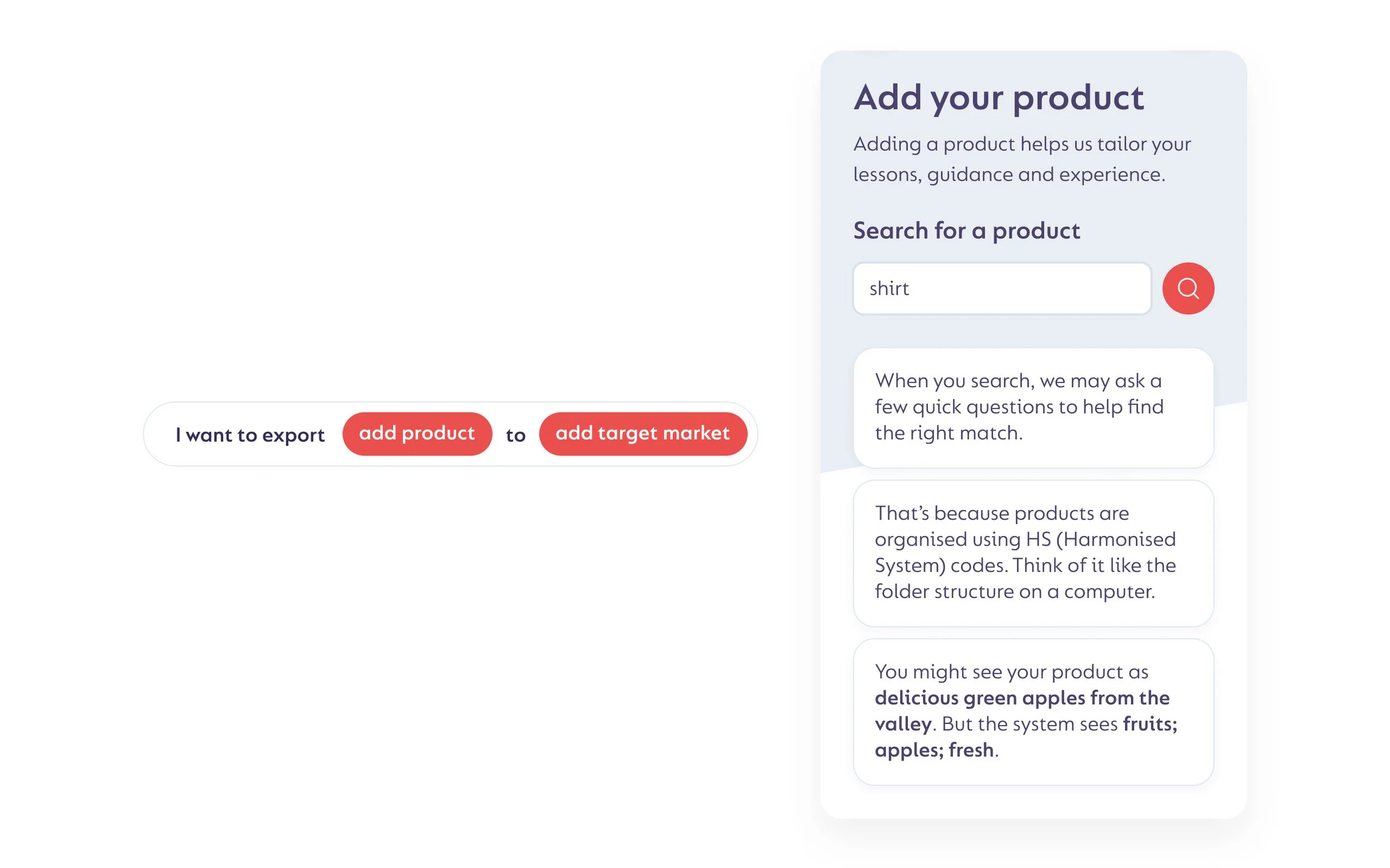
Before a business could learn or plan how to export, it needed to classify what it was selling. Every export product has an HS (Harmonised System) code, which determines duties, paperwork, and trade eligibility.
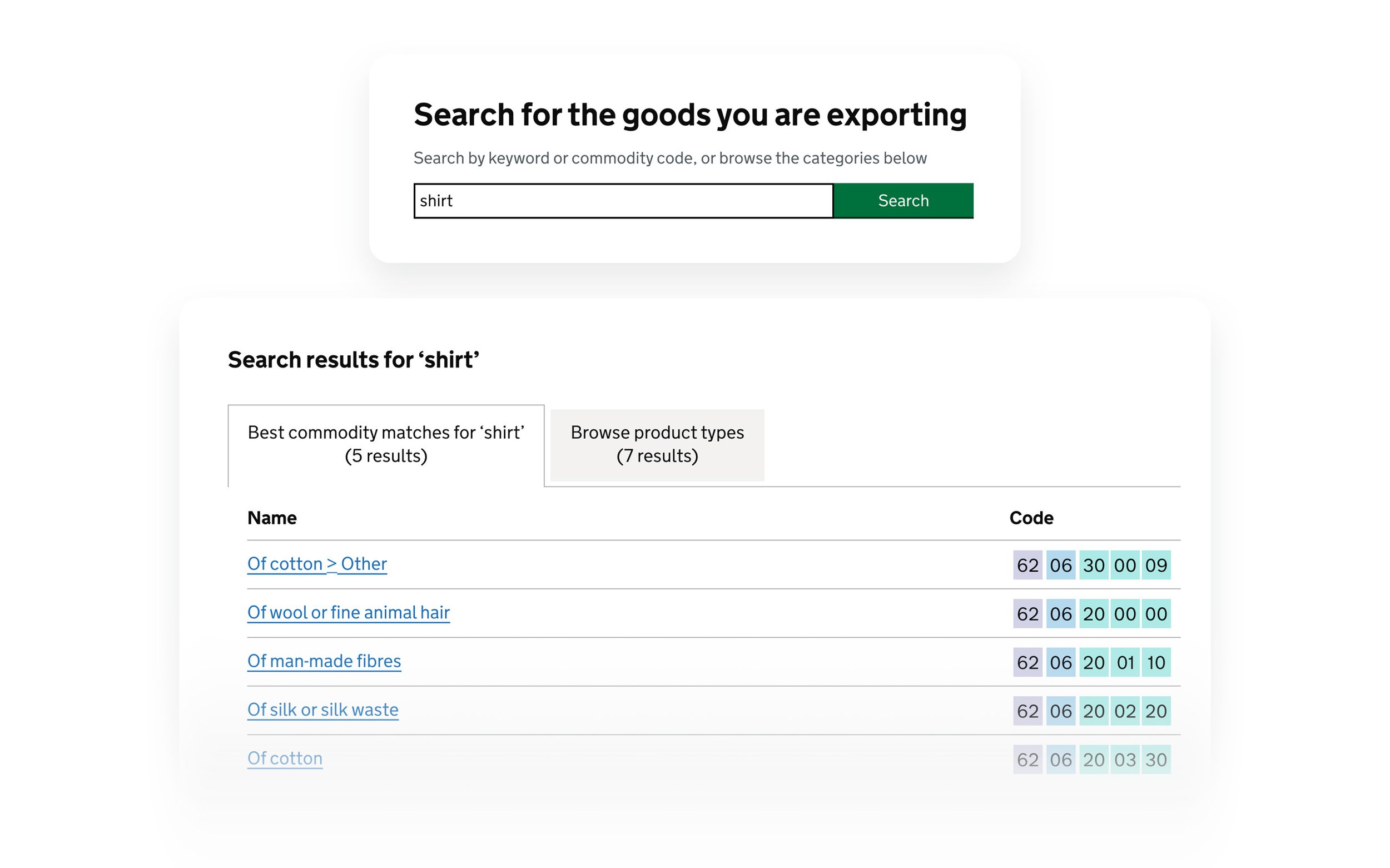
The official system was written in dense, technical language.
Businesses thought in everyday terms like “shirt”, not “men’s or boys’ shirts, knitted or crocheted.”
Incorrect classification often meant:
wrong duties or taxes
shipments delayed or rejected
inaccurate data feeding into later tools
This step was the keystone for the entire export platform. If the product was wrong, everything downstream (learning, planning, opportunity matching, and reporting) became unreliable.
Insight
Through user research, we found that exporters knew exactly what they sold but the system didn’t speak their language. The barrier was “translation”.
People needed:
relatable language
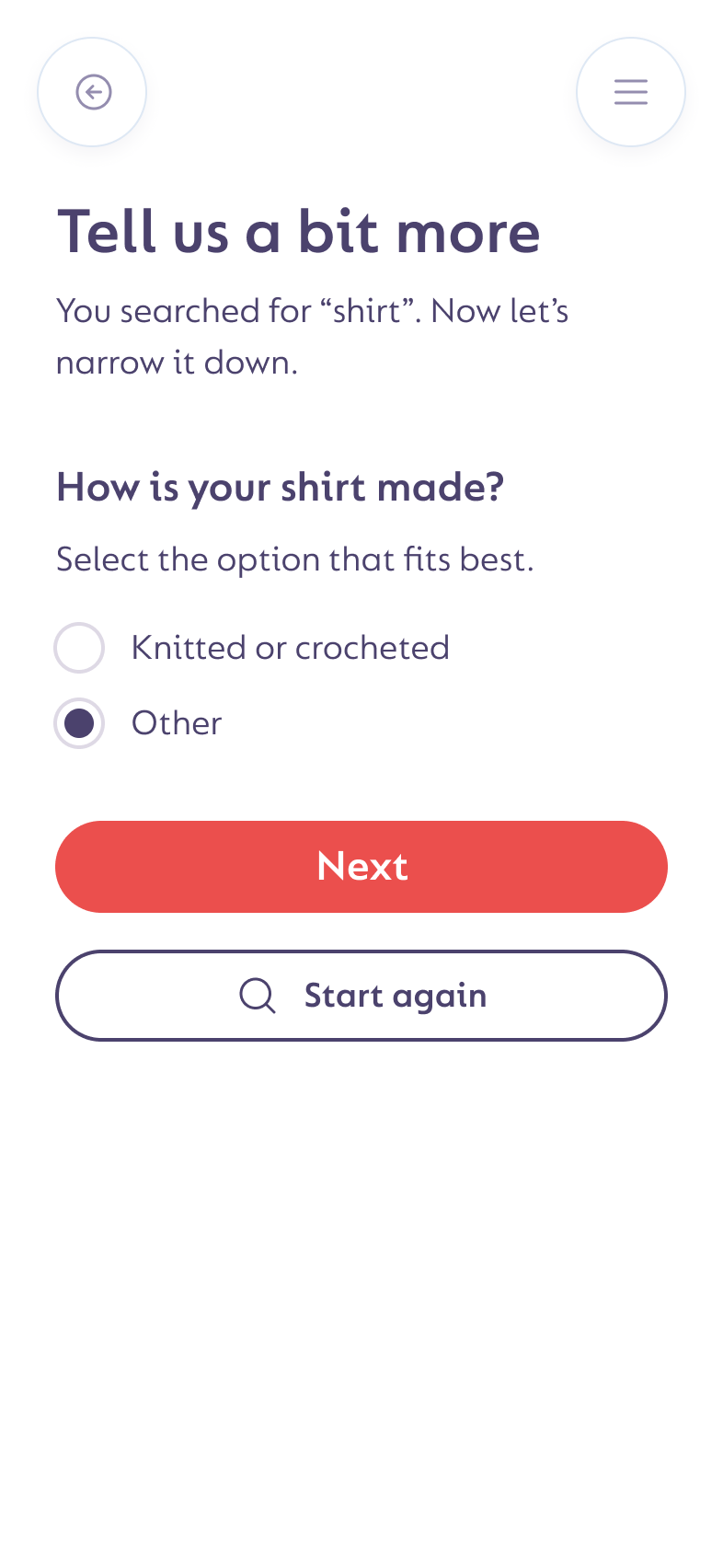
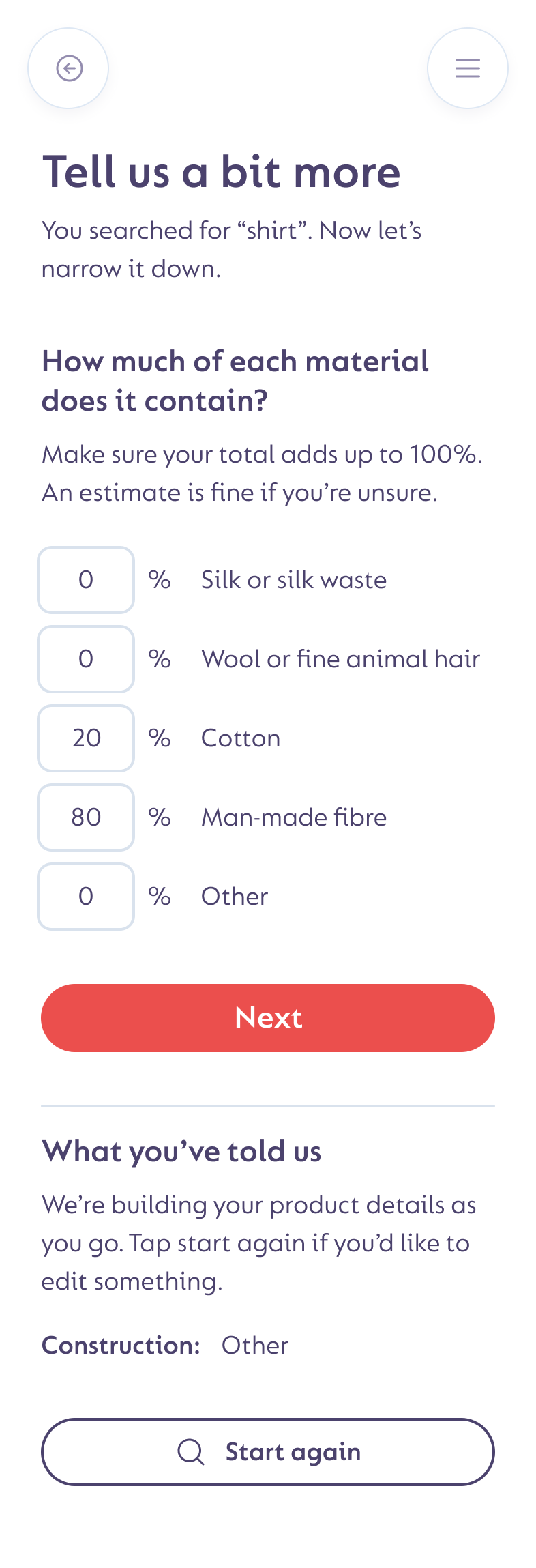
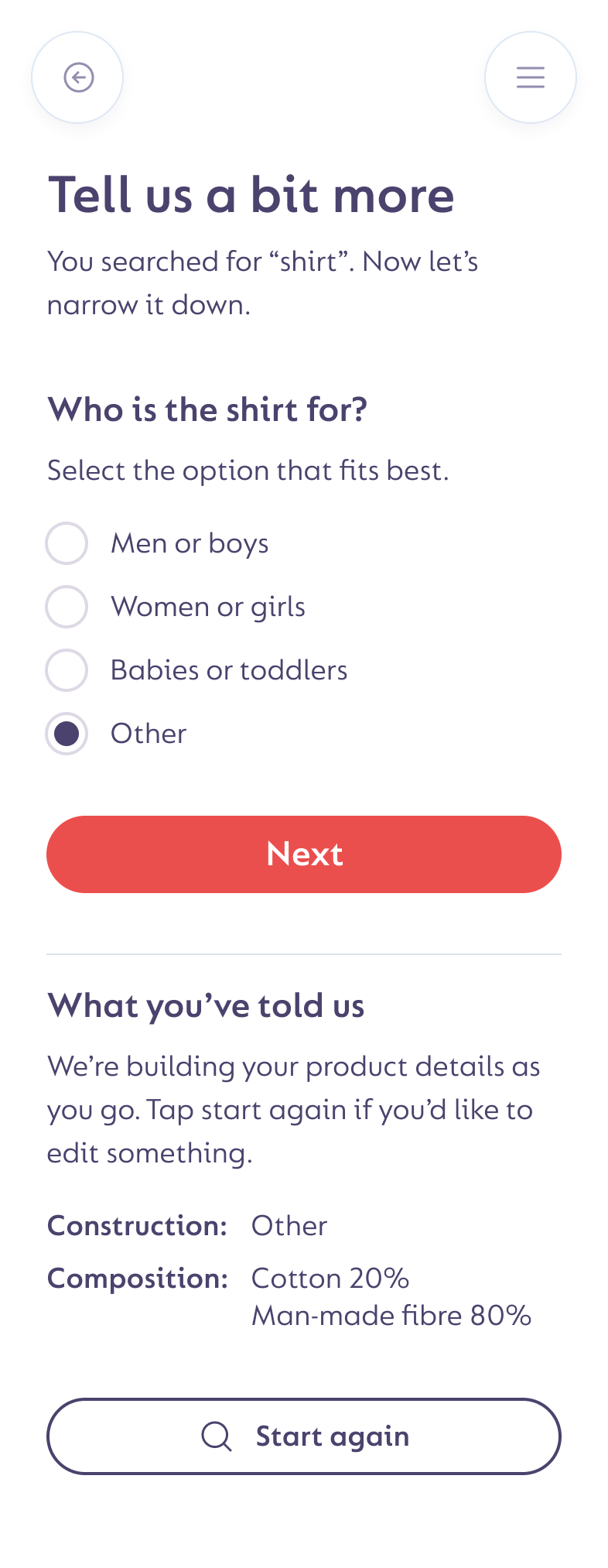
a small number of clear questions
reassurance that they were choosing the right thing
This reminded me about the original Macintosh User Manual from 1984, which Peter Merholz once wrote about on his blog. He described how it had to teach people an entirely new way of interacting with computers, explaining each concept patiently through metaphors and visuals.
New exporters faced a similar task: learning a foreign language of trade. We borrowed Apple’s philosophy, asking one clear question at a time, using plain words, and providing guidance that teaches as it goes.
Macintosh User Manual
1984
Approach
Reimagined the interaction
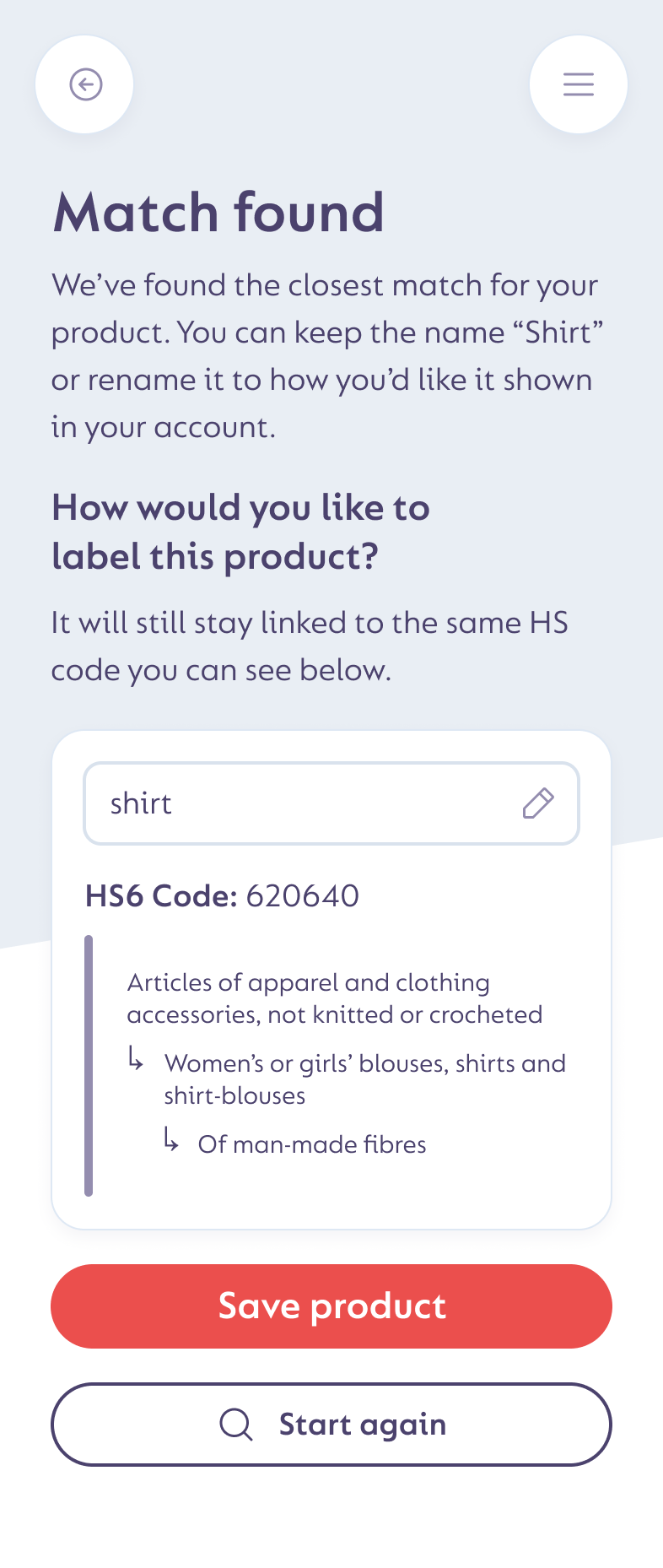
Replaced a static search table with a guided, question-based flow that narrowed options progressively.Used plain, relatable language
Added microcopy and examples that explained trade concepts without jargon while teaching users what the terms meant.Collaborated closely with developers
Used a third-party classification API to drive contextual questioning and handle the branching logic behind the flow.Integrated across services
Product selections flowed directly into: Learn How to Export, Export Plan, Data Hub, and other connected services and products.Tested iteratively
Validated accuracy and confidence with exporters, advisers, and policy teams across multiple cycles.
Outcomes
97% of users identified the correct product on the first try, up from under 40%.
Average completion time dropped from minutes to seconds.
Trade advisers reported fewer misclassifications and smoother onboarding into Data Hub.
Cleaner product data improved accuracy across the wider export ecosystem.