Head of Service and Interaction Design, UK Government – Department for International Trade
Practice Leadership: Transforming UK Export Services after Brexit to support £29bn in trade
How a small design practice helped stabilise and transform government export services


Context: Providing stability during global change
In the years following Brexit, the Department for International Trade (DIT) was navigating shifting trade policy, leadership turnover, and rapidly growing demand for digital services. Good design needed to become a source of stability.
I stepped into the Head of Service and Interaction Design role at a moment when teams needed clarity, confidence, and a shared sense of purpose. My priority was to build the environment where good design could thrive, and where evidence would inform decisions across policy, product, and operations.
This marked a shift in my role from leading projects to leading people, culture, and ways of working.
From designing products to designing the conditions for success
I redirected my focus from designing services to designing how the organisation delivered them. Our goal was to build a shared vision for how user-centred design could make exporting simpler, faster, and more transparent.
The practice grew into a 15-person multidisciplinary team working toward a single mission: helping people navigate complex trade journeys with confidence.
To raise quality and trust in design decisions, we:
Introduced design critiques and playbacks that cut across product, policy, and marketing.
Made research visible early and often, shifting conversations from opinions to evidence.
Embedded designers with senior leaders, service owners, and product heads to influence priorities before decisions were set, and to align design roadmap with trade policy priorities.
Alongside delivery, I introduced a capability framework that clarified roles, expectations, and progression across design disciplines.
A Community of Practice connected designers across portfolios, creating consistency through rapid organisational change.
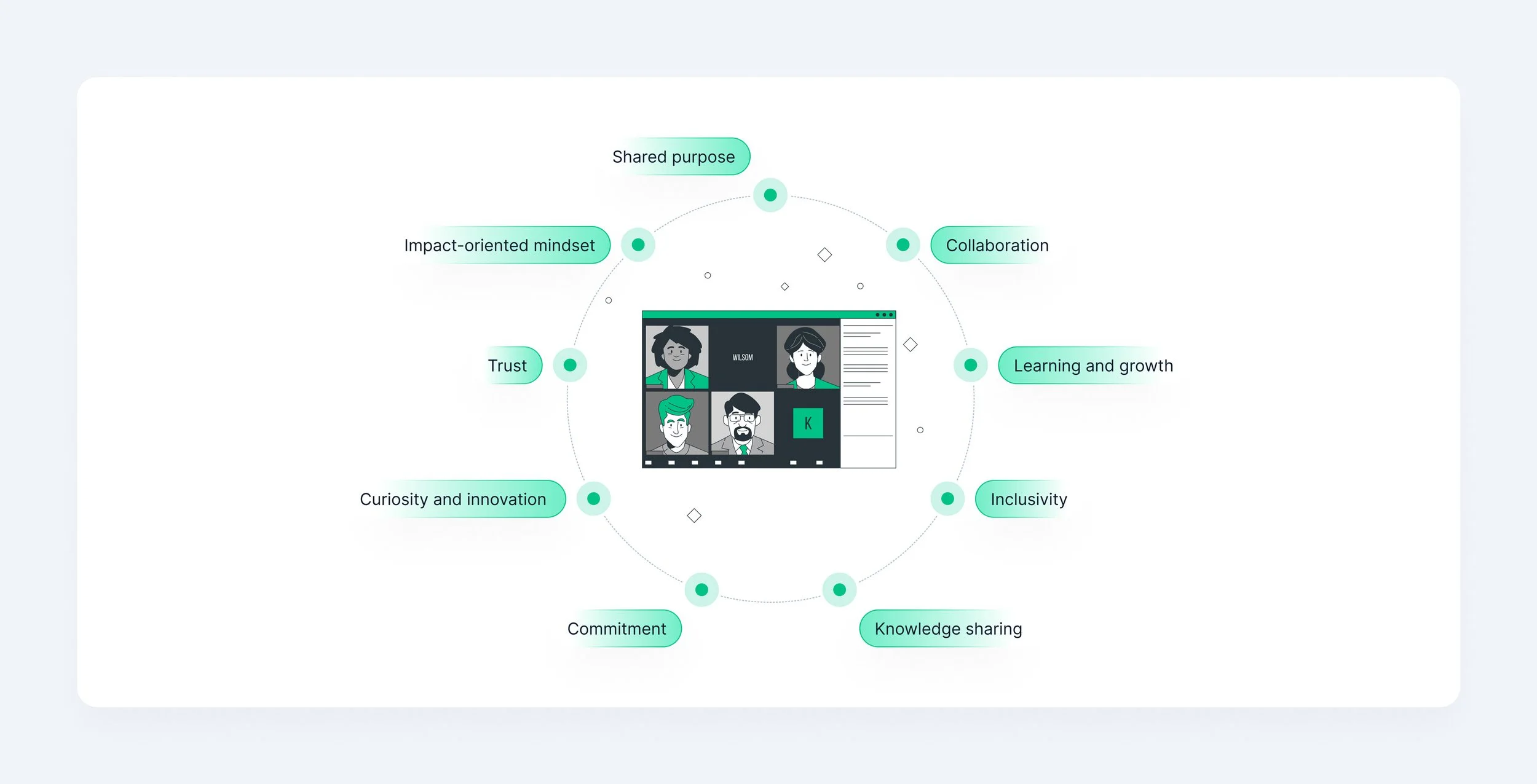
Values that shaped DIT’s design culture: shared purpose, trust, collaboration and continuous learning.
Turning insight into structure
Early research revealed four universal user needs that cut across every service:
Export: Help me start, plan and grow my export business.
Investment: Help me find the right opportunities and bring investment into the UK with confidence.
Trading Environment: Help me understand the rules and avoid costly mistakes.
Data: Give me one source of truth so I can manage and measure the businesses I support.
These needs became our strategic portfolios. I built dedicated design pods around each one, pairing service designers, UX designers, researchers, and content designers with product and policy leads.
We worked in iterative loops: joint planning for alignment, cross-portfolio stand-ups for awareness, and autonomy within pods to keep delivery moving at pace.
This created ownership without fragmentation and gave senior leaders a clear line of sight across services and products.
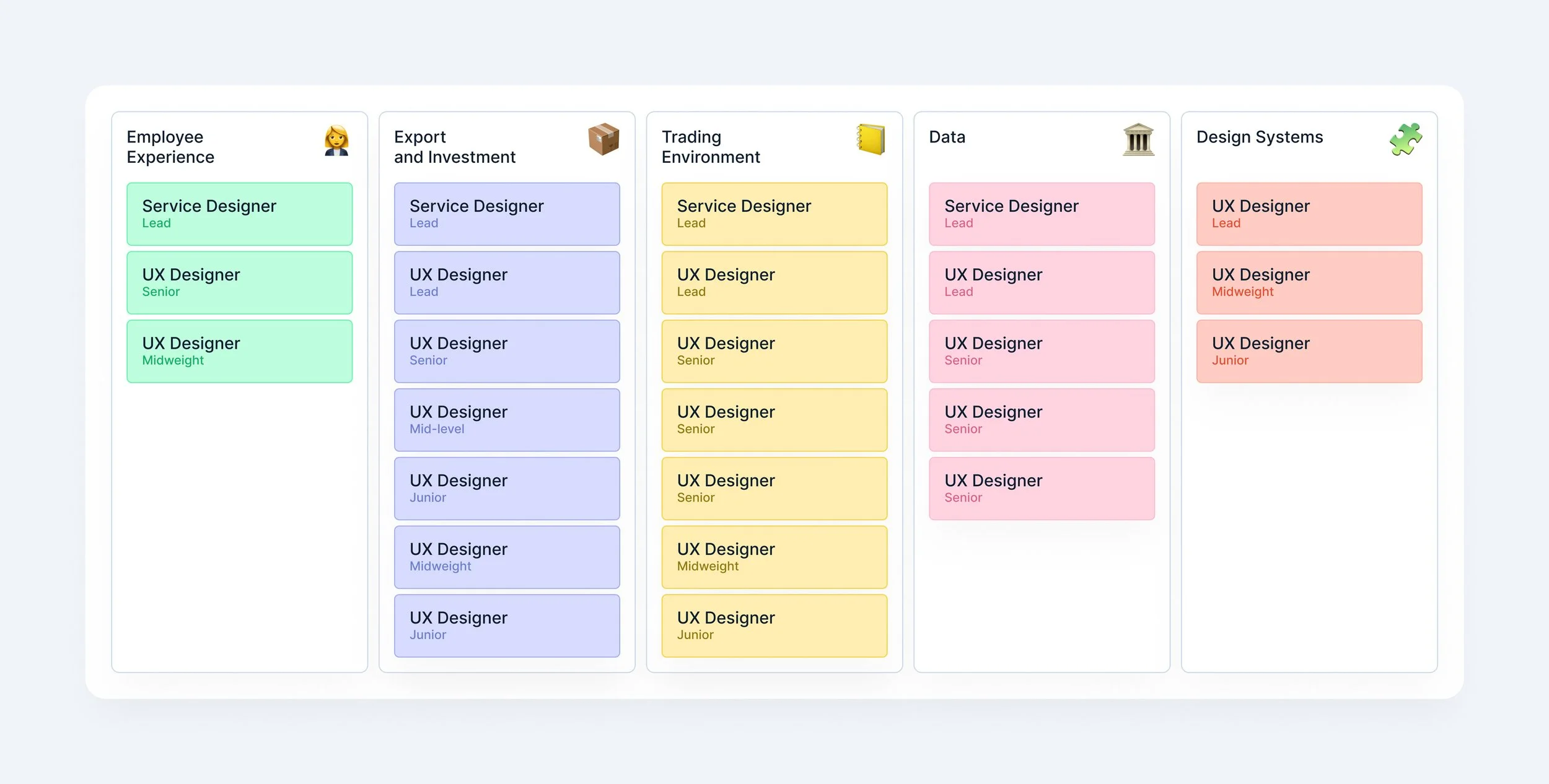
Cross-functional design pods structured around the four strategic portfolios created after Brexit.
Design that kept things moving
Our remit spanned more than twenty digital services, from the redesign of great.gov.uk to Data Hub, the CRM platform used daily by over 3,000 advisers.
To create coherence across a fragmented portfolio, we introduced the MAGNA Design System and Pattern Library, aligned all work to the Government Digital Service Standard, and partnered with Heads of Profession to prioritise the roadmap across policy, product, and engineering.
We also embedded lightweight design accelerators, such as decision-support tools that helped teams rapidly align on scope, risks, and feasibility.
These mechanisms helped maintain momentum even during policy shifts and leadership changes.
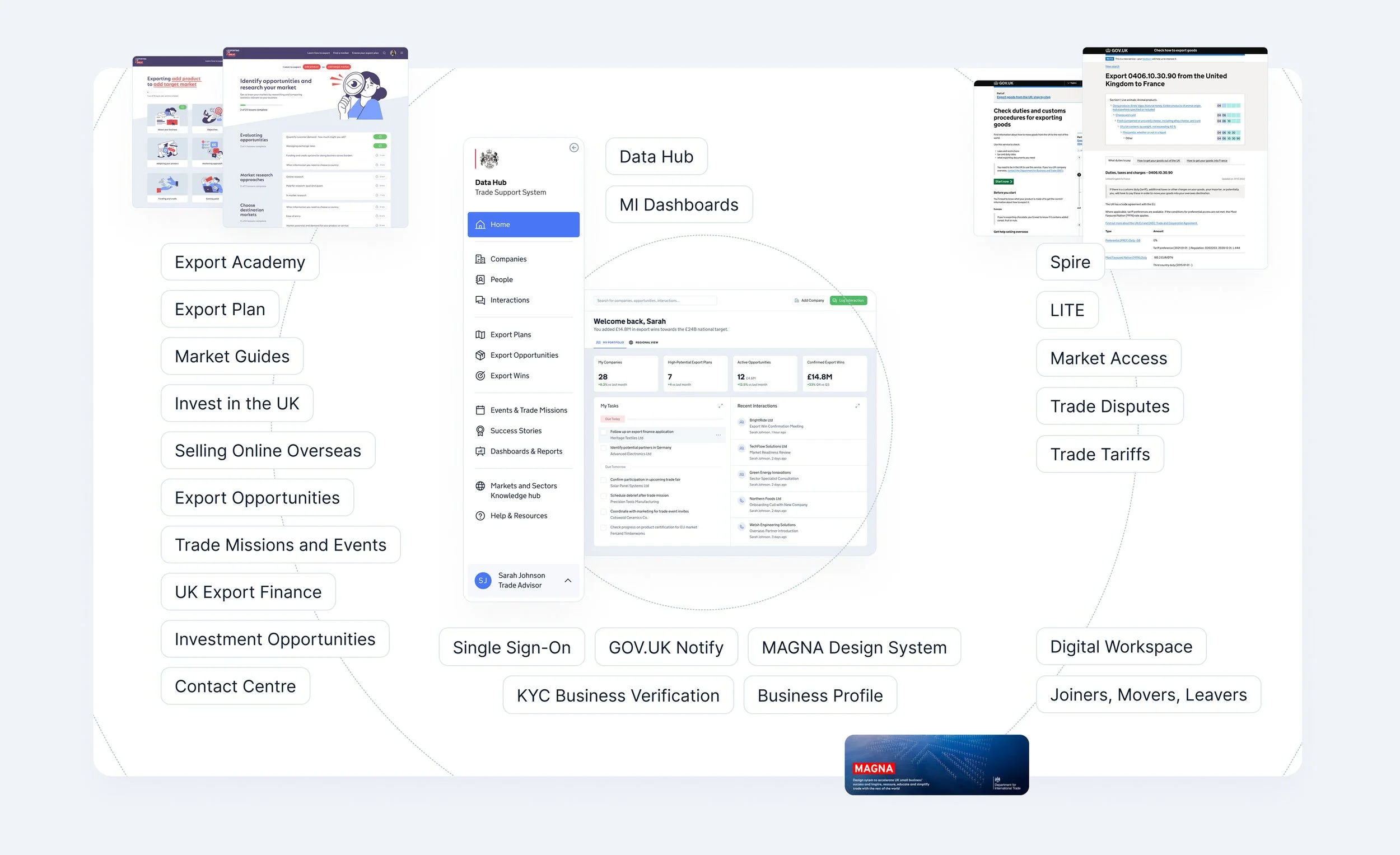
The interconnected export services digital ecosystem. Design and research reduced fragmentation and strengthened consistency across 20+ services and enablers.
Leading through ambiguity
DIT was in a constant state of change: new policy, new ministers, new priorities. My role was to provide continuity, rhythm, and a shared sense of direction.
As the practice matured, design leads evolved into coaches who could bridge design, policy, and engineering, raising the quality of decisions.
Together, we showed that design could operate at both craft and strategic level: improving services while influencing the thinking behind them.
Outcomes
Built and led a 15-person design practice embedded across four strategic portfolios: Export, Investment, Trading Environment, and Data.
Delivered 20+ digital services and enablers, from the redesign of great.gov.uk to the Data Hub used by 3,000 advisers worldwide.
Introduced the DIT Design System, ensuring consistent and accessible services.
Created a capability framework defining roles, skills, and progression for every design discipline.
Established a high-trust, evidence-led culture that aligned design with trade policy priorities.
Our collective work supported £24.4 billion in export wins (2019–20) and inspired 5 per cent of UK businesses to consider exporting.
At Department for International Trade, design became a way of thinking, helping policy, product and delivery teams move forward with purpose, evidence and confidence, even in the most uncertain moments.